
You spent way too long making the perfect Pinterest pin (because choosing between two shades of pink apparently takes 20 minutes 😆).
You scheduled your pin and waited for the traffic to come.

And…nothing.
Or maybe you got a few impressions but hardly any clicks.
Before you decide Pinterest in 2026 just doesn’t work anymore, there’s something I want you to check first:
Does Pinterest actually know what your pin is about?
Because Pinterest isn’t really social media in the same way Instagram or TikTok is. It’s a visual search engine.
And once I really understood that, it changed the way I created pins for my blogs.
People go to Pinterest because they’re looking for something.
Maybe it’s:
- Easy fall crafts for adults
- Cleaning hacks for a messy house
- Brown fall nails
- DIY Christmas decorations
- Easy hairstyles for busy moms
- Dollar Tree Halloween crafts
- Small bedroom organization ideas
- Easy weeknight dinners for families
These moms already know what they want.
Your job is to help Pinterest connect their search with your content. And one of the easiest ways to do that is with Pinterest keywords.
Don’t worry! You don’t need a complicated SEO strategy or a spreadsheet with 500 keywords.
Let me show you the simple way I approach it.
And if you’re reading this thinking, Okay Elna, but I need someone to actually show me how to do all of this, that’s exactly why I created my course Pin & Win.
I walk you through my Pinterest strategy with video tutorials and a workbook so you can actually sit down, follow along and start using Pinterest to grow your blog.
I’ll share plenty with you here, but if you want the entire process, Pin & Win goes much deeper.
What Are Pinterest Keywords?
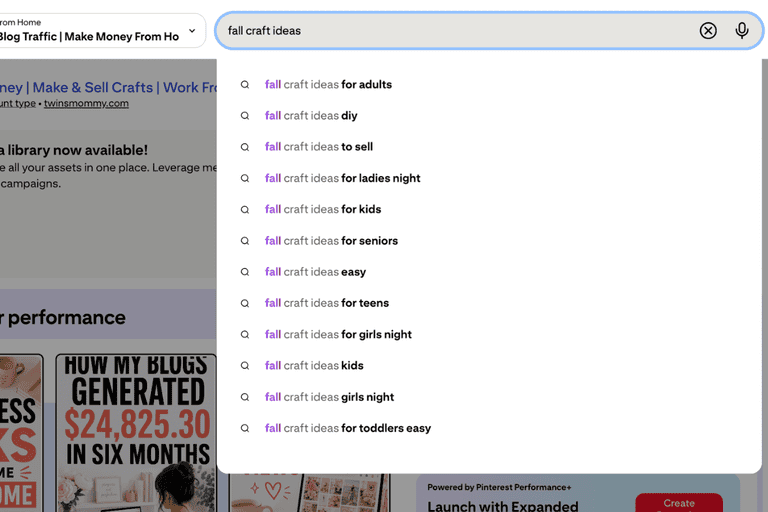
Pinterest keywords are simply the words and phrases people type into Pinterest when they’re looking for ideas.
For example, let’s say you wrote a blog post about fall mason jar crafts.
Someone probably isn’t opening Pinterest and searching:
Cute things I can make this weekend
She might search:
Fall mason jar crafts
Or:
Fall mason jar crafts for adults
Or even:
Easy fall mason jar decorations for the home
Those searches tell you exactly what she wants.
And that’s why I love using Pinterest for blogging. Of course, there are other ways to find these keywords besides on the Pinterest platform, but for beginners, this is the way to go and it’s the way I went when I fist started Twins Mommy.
You don’t have to guess nearly as much about what people are interested in.
They are literally typing it into the search bar for you!
Short-Tail vs. Long-Tail Pinterest Keywords
There are two basic types of keywords you’ll probably come across.
Short-tail keywords are broader searches like:
- Fall crafts
- Cleaning hacks
- Nail ideas
- Christmas decor
- Easy dinners
These are great for helping Pinterest understand the overall topic of your content.
But they’re pretty broad and Pinterest has been working hard at categorizing searches to make them more relevant when people search.
If someone searches “fall crafts,” Pinterest doesn’t know whether she wants preschool crafts, crochet pumpkins, wreaths, mason jars or something she can make from Dollar Tree supplies.
That’s where long-tail keywords come in.
These are more specific searches like:
- Easy fall crafts for adults
- Dollar Tree fall crafts for the home
- Cleaning hacks for busy moms
- Brown fall nails with gold accents
- DIY Christmas decorations on a budget
- Easy chicken dinners for picky eaters
See the difference?
The more specific search gives you a much better idea of what that person actually wants.
And those are the types of keywords I like looking for when I’m planning blog content and creating pins.
Sometimes this is hard because you might see a ton of search results for the broader terms, and not so much for the longer tail keywords, but I’ve realized that I have to go the longer keyword route to get the RIGHT traffic that converts.
Let Pinterest Help You Find Keywords
One of my favorite things about Pinterest is that you can use Pinterest itself for keyword research (my course Pin & Win shares with you soo many other better ways to find the right keywords for Pinterest).
Let’s say you have a post about fall crafts.
Go to Pinterest and type:
Fall crafts
Before you even finish searching, Pinterest may start giving you suggestions.
You might see things like:
- Fall crafts for adults
- Fall crafts for kids
- Fall crafts for the home
- Fall crafts Dollar Tree
- Fall crafts with leaves
- Easy fall crafts
Pay attention to those!
Pinterest is showing you searches related to what people are looking for.
Then you can get even more specific.
Maybe your post is about inexpensive crafts moms can use around their homes.
Now Dollar Tree fall crafts for the home might make much more sense than simply using fall crafts.
You can also search that phrase and see what other ideas Pinterest suggests.
This is how I like to build out my keywords. I start broad and then narrow the idea down.
For example:
Main topic: Fall crafts
More specific: Fall crafts for adults
Even more specific: Easy fall crafts for adults
Related idea: Dollar Tree fall crafts for the home
That’s plenty!
You don’t need 100 different phrases for one blog post.
I would much rather have a handful of keywords that actually describe my content than a giant list I’m never going to use.
Make Sure the Keyword Actually Matches Your Blog Post

This is a BIG one. Don’t choose a Pinterest keyword just because it looks popular.
It has to match what you’re giving the reader. Let’s say you wrote:
18 Fall Mason Jar Decorations You Can Make
You find these searches:
Fall decor
Fall crafts
Fall mason jar crafts
Which one tells Pinterest exactly what your post is about?
Fall mason jar crafts.
And you can get even more specific with related searches like:
Fall mason jar decorations
DIY fall mason jar crafts
Fall mason jar crafts for adults
Now Pinterest has a much clearer idea of who might want your post.
And the person clicking your pin gets exactly what she expected. That’s important!
I always want my pin to match the blog post behind it.
If your pin promises gorgeous DIY fall decor and someone clicks over to a post about organizing their pantry, she’s going to leave pretty quickly.
Pinterest traffic works best when the search, pin and blog post all make sense together.
Think:
One search → one helpful pin → one helpful blog post.
Keep it simple.
Use Pinterest Trends to Plan Ahead
This is something I really love doing for seasonal content. Pinterest users are planners. They’re looking for Halloween ideas before Halloween.
Christmas ideas before December.
Fall decor before the leaves even start changing.
And this is why I like getting my seasonal content onto Pinterest months ahead of the actual season.
For my own seasonal content, I like planning roughly three months ahead.
So, I’m not waiting until October to start thinking about Halloween pins. I’m already working on them in the summer.
And yes, it feels VERY strange to be looking at pumpkins when you’re still wearing shorts. 🙂
But that’s how Pinterest works. You can use Pinterest Trends to look up topics and see when interest starts climbing.
For example, you might look at:
Halloween treats
Fall nails
Thanksgiving decor
Christmas crafts
Summer dinner ideas
Look at when searches start increasing—not just when they hit their highest point. That’s when I want my content already circulating on Pinterest.
Give Pinterest time to understand your pins and figure out who should see them.
Where Should You Put Pinterest Keywords?
Once you find your keywords, don’t just write them down and forget about them.
Pinterest needs some clues about your content. Here are the places I pay attention to.
1. Your Pinterest Profile
Your profile should make it obvious what kind of content you share.
If your blog is mostly crafts, DIY decor and organization, those are the kinds of words Pinterest should see.
For example:
Easy crafts, DIY home decor, organization ideas and seasonal decorating inspiration for busy moms.
Simple. Someone landing on your profile immediately knows what you’re about.
2. Your Pinterest Boards
Please don’t get too cute with board names!
I know it’s tempting. But Pinterest needs to understand them.
Instead of:
Cozy Things I Love
Try:
Cozy Fall Home Decor
Instead of:
Pretty Things
Try:
Nail Ideas for Women
Clear board names help Pinterest categorize your content. You can then add a natural board description with a few related phrases.
3. Your Pin Title
This is where I want to be very clear about what the reader is getting.
Instead of:
You HAVE to Try These!
Try:
18 Easy Fall Mason Jar Crafts for Your Home
Instead of:
These Are So Pretty!
Try:
25 Brown Fall Nail Ideas You’ll Want to Copy
The second versions still sound clickable, but they also tell Pinterest what the content is about.
That’s what we want.
4. Your Pin Description
Your pin description gives you a little more room to naturally work in related keywords. You can even use ChatGPT or Claude to help you create these easily too.
For example:
Looking for easy fall mason jar crafts? These DIY fall mason jar decorations are perfect for adding a cozy touch to your home this season. Find simple fall craft ideas using mason jars, paint, ribbon, leaves and other inexpensive supplies.
See how I’m using different versions of the topic?
I’m not repeating fall mason jar crafts six times. I’m giving Pinterest context while still writing something a real person can understand.
That’s how I like to do Pinterest SEO.
Natural first.
5. The Words on Your Pin
Don’t forget about your actual pin!
Your pin image might be gorgeous, but the person scrolling still needs to know why she should click.
If you’re sharing a post about cleaning hacks, your pin might say:
15 Cleaning Hacks Every Busy Mom Needs
If it’s a beauty post:
25 Gorgeous Brown Fall Nails
If it’s a craft:
18 Easy Fall Mason Jar Crafts
I usually prefer straightforward titles because Pinterest users scroll FAST.
Don’t make them figure out what your pin is about.
Tell them.
6. Your Alt Text
Alt text is primarily there to describe your image for accessibility. So use it that way.
You might write:
Pinterest image showing three DIY fall mason jar decorations with pumpkins and autumn leaves.
If your keyword fits naturally, great.
But you don’t need to stuff five Pinterest keywords into your alt text. Just describe the image clearly.
Don’t Stuff the Same Keyword Everywhere

Pinterest SEO doesn’t mean copying and pasting the exact same phrase into every possible place.
You can use related keywords. For example, if your main keyword is:
Fall mason jar crafts
You might also naturally use:
- DIY fall mason jar decorations
- Fall mason jar ideas
- Easy fall crafts for adults
- Fall crafts for the home
- Mason jar fall decor
They’re all helping Pinterest understand the same general topic. This is also one reason I like creating several pins for the same blog post.
You can test different images, titles and keyword angles.
One pin might say:
18 Fall Mason Jar Crafts
Another:
Easy Mason Jar Fall Decor Ideas
And another:
DIY Fall Mason Jar Decorations for Your Home
Same post.
Different ways of reaching someone searching Pinterest. And sometimes you’ll be surprised which one takes off!
My Simple Pinterest Keyword Routine
I don’t want Pinterest keyword research taking all afternoon.
You have a blog to run, a house to clean, kids asking what’s for dinner and probably a load of laundry you’ve restarted twice because you forgot about it. 🙂
So keep this simple and that’s why my Pin & Win course is perfect for busy moms!
Before you make your next batch of pins:
- Pick one blog post you want to promote.
- Write down the main topic.
- Search that topic on Pinterest.
- Look at the suggested searches Pinterest gives you.
- Pick one long-tail keyword that closely matches your post.
- Write down two or three related keywords.
- Check Pinterest Trends if the topic is seasonal.
- Use your main keyword in your pin title and naturally in your description.
- Create a clear title for the actual pin image.
- Save it to your most relevant Pinterest board.
That’s it!
You can always create another pin later using a slightly different keyword or title.
And then watch your Pinterest analytics. I look at impressions, of course, but I’m especially interested in outbound clicks.
Because thousands of people seeing a pretty pin is nice.
But I want people clicking over to my blog!
That’s where Pinterest becomes more than another platform you have to keep up with.
It becomes a traffic source.
Keep Your Pinterest Strategy Simple
I know Pinterest can feel like there are 101 things you’re supposed to be doing.
- New pins
- Keywords
- Boards
- Trends
- Analytics
- SEO
It can get overwhelming fast.
But you don’t have to master everything today.
Start with one blog post and one keyword.
Make sure Pinterest understands what your content is about and make sure the mom searching for that idea immediately understands what she’s going to get when she clicks.
That’s really the goal.
You aren’t trying to trick Pinterest into giving you traffic.
You’re helping Pinterest connect your helpful content with the person already searching for it.
And when you keep creating useful content around things people are actively searching for, those pins can continue working for your blog long after you hit publish.
So, pick one post today and type the topic into Pinterest.
See what comes up.
You might discover your next pin idea—or even your next blog post—sitting right there in the search bar.
Pinterest SEO Make Easy
There ya go!
I hope you found some help in creating Pinterest post for traffic!



Leave a Reply